Computationally Designed Optics
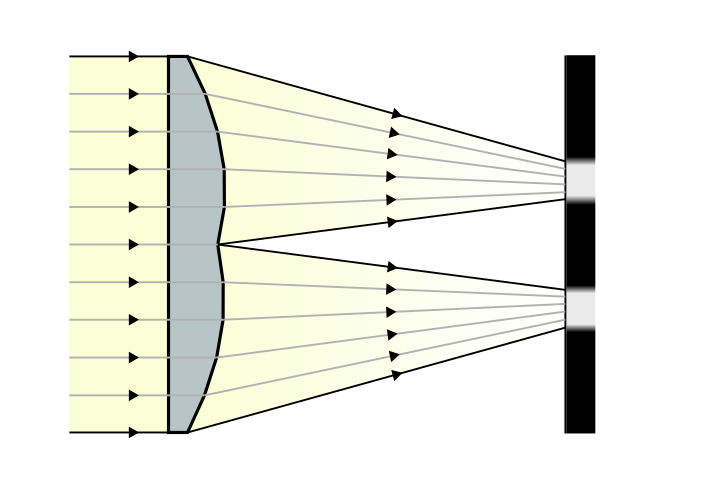
Our technology computes freeform transparent surfaces that precisely control how light is redistributed. By solving complex differential equations, we encode images into the shape of a transparent or reflective material.
Hello World Prototype
Interact with the 3D model on the left to see the microscopic surface variations that generate the image on the right.
Load the interactive 3D demo
The Lens: A single refractive surface. To the naked eye, the variations are hard to distinguish.
Precisely controlling light
Conventional optics rely on multiple elements or discontinuous facets to shape light. Our approach is different.
We treat the optic as a single continuous surface. We calculate the slope variations required across that surface to bend the light exactly where it needs to go.
- Single Component: No complex assemblies.
- Invisible Engineering: The image is encoded in surface height differences often smaller than perceivable.